Strength · Stability · Suppleness
Complete Equestrian Pilates
Riders are athletes who train everything except themselves. This is the other half of the work: the strength, stability and suppleness that let you sit straight, stay quiet and give an aid the horse can actually read.
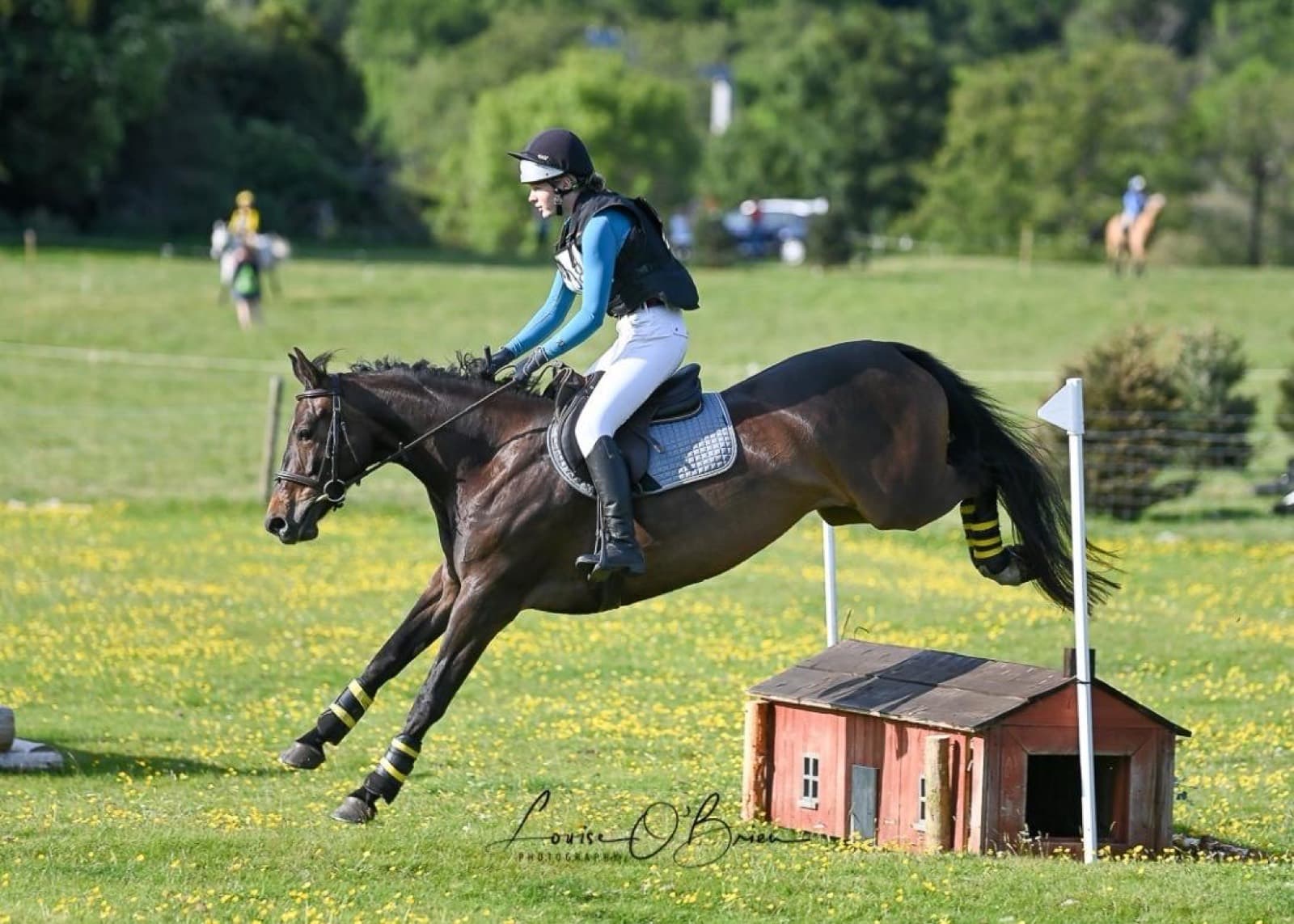
Why Equestrian Pilates
Do you struggle with balance, strength and control on the horse?
Over twenty years of Pilates teaching and movement therapy, and a previous life as an event rider, went into building this programme. It is based on a simple framework: maximising strength, stability and suppleness.
Strength
Not gym strength. The kind that holds a position for forty minutes without gripping, so the horse gets a still seat rather than a braced one.
Stability
A pelvis and ribcage that stay where you put them while the horse moves underneath. Everything a rider calls balance is built on this.
Suppleness
Range you can control, in the hips and through the thoracic spine. Range without control is just looseness, and the horse feels that too.
Four rider problems with a movement cause
These come up again and again in lessons, and no amount of riding fixes them, because the cause is not on the horse.
Tipping in the saddle, and the lower back pain that follows
Usually a pelvis that cannot stay upright without gripping, so the lower back takes the strain instead of the hips. The hip flexors are rarely just tight. More often they are weak at the far end of their range, so they grip to hold a position they cannot control.
What we work on. Neutral pelvis, deep abdominal endurance, and hip flexor strength in a lengthened position rather than more stretching.
Collapsing through one side
One side of the waist is shorter and weaker than the other, so you sit crooked and the horse feels it before you do.
What we work on. Side-lying and side plank work, and single-side strength rather than gripping.
A fixed or unsteady hand
A hand that cannot stay independent is nearly always a shoulder blade that is not connected to the ribcage.
What we work on. Scapular setting, serratus and lower trapezius, thoracic mobility.
Not being able to turn, or to give an effective leg aid
Rotation that comes from the lower back rather than the ribcage, and hips that cannot move independently of the pelvis.
What we work on. Thoracic rotation, hip dissociation, glute strength in standing.
Taught by someone who has ridden
Jacqueline is a former event rider with over twenty years of Pilates teaching and movement therapy behind her. That combination matters here. Knowing what a rider is trying to do with their seat is what turns a general core class into something that changes how you sit.
The work starts with a full assessment, on the ground, of what your body can and cannot currently do. Then a programme built around your own asymmetries, and around whatever your instructor keeps telling you every week.
A note on riding injuries